
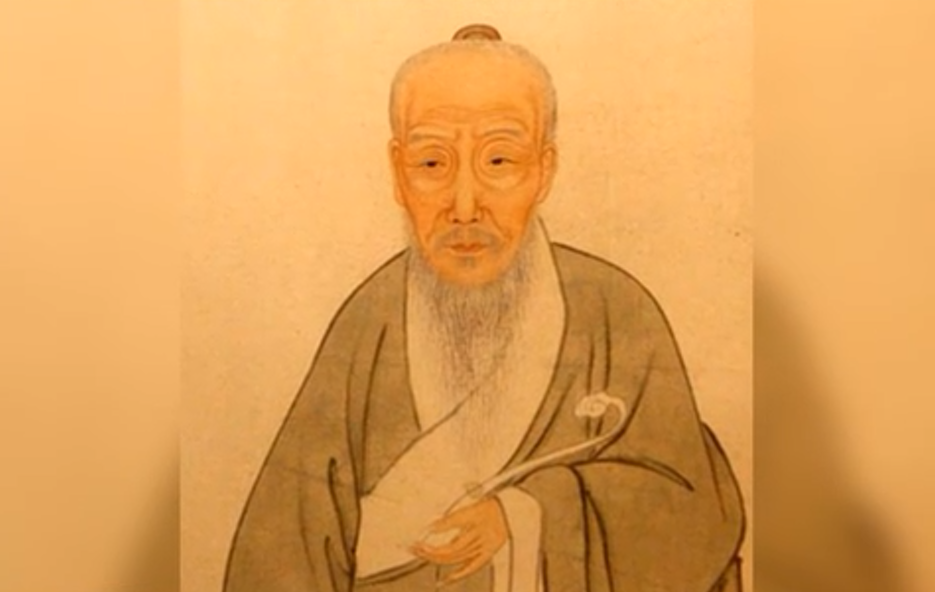
Peng Si(彭耜): A Daoist Master's Legacy and the Path of the Dao
Paul PengShare

Understanding the Daoist Tradition
What Does It Mean to Be a Daoist?
Those who call us "Daoists" or "Taoists" often see only the surface - the robes, the rituals, the mountain retreats. But the true meaning runs deeper than the Yellow River's ancient course.
We are followers of the Dao (道) - the ineffable source and pattern of all existence. As Laozi taught us in the opening lines of the Dao De Jing:
"The Dao that can be spoken is not the eternal Dao"
The Three Treasures of Practice
| Treasure | Chinese | Meaning | Practice |
|---|---|---|---|
| Compassion | 慈 (Ci) | Loving-kindness toward all beings | Cultivating mercy in daily interactions |
| Frugality | 俭 (Jian) | Simplicity and moderation | Living with what is necessary |
| Humility | 不敢为天下先 | Not daring to be first in the world | Yielding and following natural order |
Daoist Masters Through the Ages
Our lineage stretches back through misty centuries, each generation passing down wisdom like water flowing through mountain streams. Whether Peng Si lived during the Han, Tang, or Song dynasties matters less than the timeless truths he embodied.
Consider the great masters who came before:
Zhang Daoling (34-156 CE) - Founded the Celestial Masters sect, establishing the first organized Daoist community. Like Peng Si, he understood that true cultivation requires both solitary practice and community guidance.
Ge Hong (283-343 CE) - The great alchemist who wrote the Baopuzi, teaching us that immortality comes not from external elixirs alone, but from internal transformation.
Lu Dongbin - One of the Eight Immortals, showing us that enlightenment can bloom even in a world of wine and wandering.
The Role of Daoist Priests in Chinese Society
We have always served as bridges - between Heaven and Earth, between the living and the ancestors, between the mundane and the sacred. Our roles encompass:
- Ritual Specialists: Performing ceremonies for births, deaths, seasonal changes
- Healers: Using traditional medicine, qigong, and spiritual guidance
- Scholars: Preserving ancient texts and wisdom traditions
- Community Leaders: Providing moral guidance and conflict resolution
The Daoist Path: Theory and Practice
Core Philosophical Principles
Wu Wei (無為) - Non-Action
Not the absence of action, but action in perfect harmony with natural flow. Like water that wears down the hardest stone not through force, but through gentle persistence.
Yin-Yang (陰陽) - Complementary Opposites
The dance of opposing forces that creates all phenomena. In our practice, we learn to balance:
| Yin Qualities | Yang Qualities |
|---|---|
| Receptive | Active |
| Soft | Firm |
| Inner | Outer |
| Contemplative | Expressive |
| Yielding | Advancing |
Ziran (自然) - Natural Spontaneity
Living in accordance with one's authentic nature, free from artificial constraints and social pretensions.
Daily Practices of a Daoist
Morning Cultivation
Before dawn breaks, we begin with Jingzuo (靜坐) - sitting meditation. In the stillness, we cultivate the Three Treasures: Jing (essence), Qi (energy), and Shen (spirit).
Qigong and Internal Alchemy
Through breathing exercises and gentle movements, we refine our internal energy. The goal is not physical prowess but the harmonization of our inner landscape.
Study of Sacred Texts
We immerse ourselves in the wisdom of the Dao De Jing, Zhuangzi, I Ching, and countless other treasures of our tradition.
Service to Community
True cultivation cannot be separated from compassionate action in the world.
The Mysterious Arts and Sciences
Traditional Daoist Practices
Our tradition encompasses what outsiders often call "supernatural" but which we understand as natural extensions of human potential:
Feng Shui - Reading the dragon lines of earth energy to create harmony between human dwellings and natural forces.
Traditional Chinese Medicine - Understanding the body as a microcosm of the universe, with meridians of qi flowing like rivers through the landscape of flesh.
Divination - Using the I Ching, astrology, and other methods to discern the patterns of change in the cosmic order.
Alchemy - Both external (creating elixirs and medicines) and internal (refining consciousness itself).
The Path to Immortality
When we speak of immortality, we don't mean the preservation of this temporary shell of flesh and bone. We mean the cultivation of an indestructible spiritual essence - what we call the Golden Elixir (金丹).
This is achieved through:
- Refining Jing into Qi - Transforming bodily essence into subtle energy
- Refining Qi into Shen - Elevating energy into spiritual light
- Refining Shen into Void - Merging individual consciousness with the infinite Dao
- Returning to the Source - Achieving unity with the primordial emptiness
Living the Daoist Life Today
Modern Challenges, Ancient Wisdom
In this age of smartphones and social media, the need for Daoist wisdom grows ever stronger. We offer not escape from the modern world, but a way to move through it with grace and wisdom.
The principles remain unchanged:
- Simplicity over complexity
- Harmony over conflict
- Patience over haste
- Wisdom over mere knowledge
- Being over having
Finding Your Own Path
Whether you seek to understand figures like Peng Si or to begin your own journey on the Daoist path, remember this: the Dao that can be grasped is not the true Dao. Our role as teachers is not to give you answers, but to help you discover the questions that matter.
Start with stillness. Sit quietly each morning and listen to the silence between your thoughts. There, in that space of pure awareness, you will begin to taste the infinite mystery that connects all things.
The mountain does not seek to be tall, yet it touches the clouds. The valley does not seek to be low, yet it receives all waters. In the same way, those who follow the Dao do not seek greatness, yet they become sources of wisdom for all who encounter them.
May you walk in harmony with the eternal Dao.
Further Reading
For those drawn to explore deeper:
- Dao De Jing by Laozi - The foundational text of philosophical Daoism
- Zhuangzi - Poetic explorations of Daoist thought through stories and parables
- The Secret of the Golden Flower - A guide to Daoist meditation practices
- The Tao of Physics by Fritjof Capra - Modern physics meets ancient wisdom
Part of the Series
This article is part of our comprehensive guide covering all core Taoist philosophies, concepts, and practices — curated from the classic Encyclopedia of Taoism.
View Full Guide → ✦ Explore All Topics
About the Author
Paul Peng
Paul Peng is a Zhengyi Taoist priest from Longhu Mountain, Jiangxi — the ancestral home of the Celestial Masters' tradition. Ordained at 25 after a dream from the Celestial Master, he has practiced for 25 years under Master Zeng Guangliang. He is one of the curators of this store, which is officially authorized by Tianshi Fu. All items are consecrated at the temple by the resident priest team.
Read his full story →


