
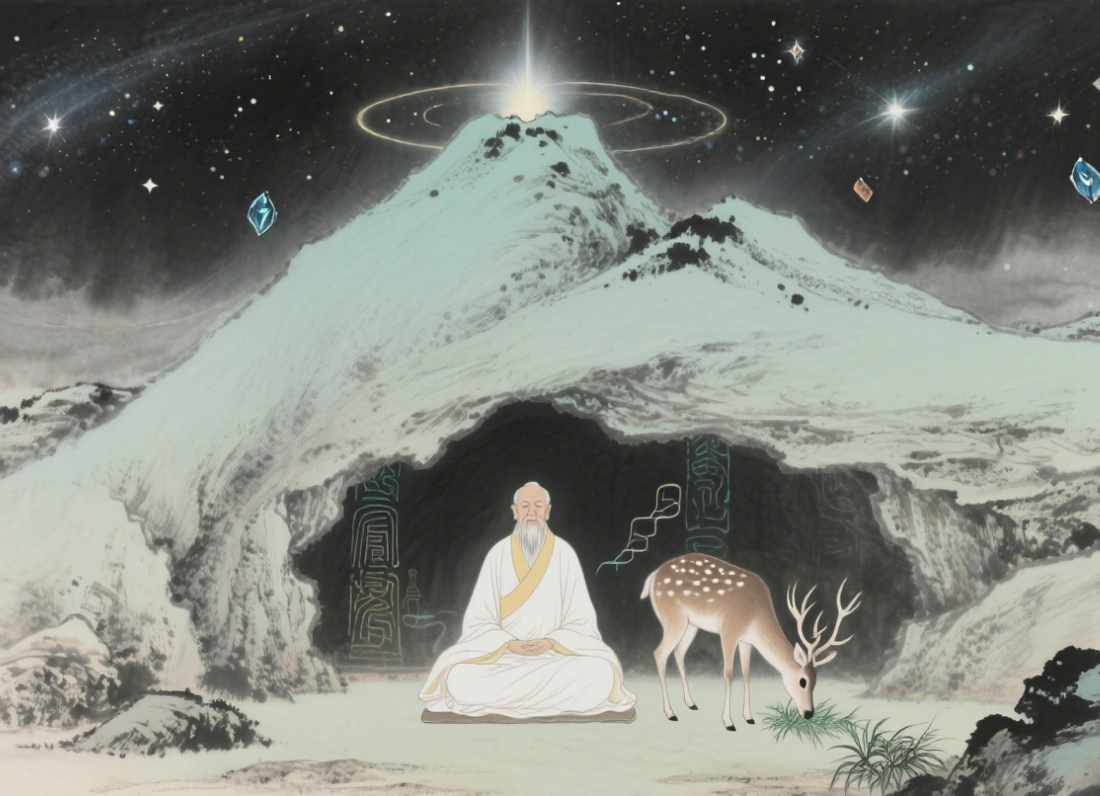
Shao Yuanjie(邵元节): Ming Dynasty Taoist & Trusted Leader
Paul PengShare

The Path to Enlightenment
Early Life and Calling
Young Shao's journey began in the mountains of Jiangxi, where the mist-shrouded peaks have long been sanctuaries for those seeking spiritual cultivation. Unlike many who inherit their religious positions, Shao earned his through genuine devotion and scholarly excellence.
Rise to Prominence
| Period | Achievement | Significance |
|---|---|---|
| 1480s | Ordained as Daoist priest | Began formal religious training |
| 1490s | Advanced studies in Daoist texts | Mastered classical scriptures |
| 1500s | Appointed to court positions | Gained imperial recognition |
| 1520s | Became 43rd Celestial Master | Supreme leader of Zhengyi school |
Contributions to Daoist Tradition
Scriptural Works and Teachings
Master Shao's greatest gift to our tradition lies in his scholarly works. He compiled and annotated numerous Daoist texts, ensuring that future generations would have access to authentic teachings. His approach was methodical yet inspired - he understood that preservation of wisdom requires both scholarly rigor and spiritual insight.
Administrative Reforms
As Celestial Master, Shao implemented crucial reforms within the Zhengyi school:
- Standardized ordination procedures - Ensuring quality and authenticity in priestly training
- Established clear hierarchies - Creating order while maintaining spiritual focus
- Promoted scholarly study - Balancing meditation with intellectual understanding
- Strengthened temple networks - Building connections across China's Daoist communities
The Zhengyi School Under His Leadership
Core Principles
The Zhengyi (Orthodox Unity) school, which Master Shao led, emphasizes several key aspects that distinguish it from other Daoist traditions:
Ritual Mastery: We focus extensively on ceremonial practices, understanding that proper ritual creates harmony between heaven, earth, and humanity.
Community Service: Unlike hermit traditions, Zhengyi priests actively serve their communities, performing marriages, funerals, and healing ceremonies.
Scriptural Authority: We maintain strict adherence to classical Daoist texts, viewing them not as mere philosophy but as practical guides for spiritual cultivation.
Hereditary Succession: The position of Celestial Master passes through family lines, ensuring continuity of authentic transmission.
Organizational Structure
Celestial Master (天师)
    ↓
Regional Masters (地区法师)
    ↓
Temple Abbots (住持)
    ↓
Ordained Priests (道士)
    ↓
Novices (道童)
Imperial Relations and Political Influence
Master Shao's era coincided with significant political changes in China. The Ming Dynasty, while generally supportive of Daoism, maintained careful oversight of religious activities. Shao navigated these waters with remarkable skill, maintaining the independence of Daoist practice while respecting imperial authority.
Court Appointments
His reputation for wisdom and integrity earned him several court positions:
- Imperial Advisor on Religious Affairs
- Supervisor of Daoist Ceremonies
- Counselor on Spiritual Matters
These roles allowed him to protect Daoist interests while contributing to the broader spiritual welfare of the empire.
Philosophical Contributions
The Way of Balance
Master Shao taught that true Daoist practice requires balance between:
| Aspect | Internal Practice | External Expression |
|---|---|---|
| Study | Contemplation of scriptures | Teaching others |
| Ritual | Personal cultivation | Community ceremonies |
| Morality | Self-purification | Ethical guidance |
| Service | Spiritual development | Helping those in need |
Integration of Traditions
One of Shao's greatest achievements was his ability to integrate various streams of Daoist thought without compromising their essential character. He understood that while the Dao is one, its expressions are many, and wisdom lies in recognizing the unity within diversity.
Legacy and Influence
Lasting Impact on Daoist Practice
Master Shao's influence extends far beyond his lifetime. His organizational reforms created a stable foundation for the Zhengyi school that continues today. The 63rd and current Celestial Master, Zhang Yuanxian, still operates from Longhu Mountain using structures that Shao helped establish.
Modern Relevance
In our contemporary world, Master Shao's example offers valuable lessons:
- Scholarly Dedication: His commitment to preserving authentic teachings reminds us that tradition requires both reverence and intellectual rigor
- Practical Wisdom: His ability to serve both spiritual and secular needs shows how Daoist principles can guide us in all aspects of life
- Adaptive Leadership: His successful navigation of political changes demonstrates the importance of flexibility without compromise of core values
Reflections from the Mountain
As I write these words from my own humble mountain retreat, I'm reminded of Master Shao's enduring wisdom. He understood that being a Daoist priest means more than personal cultivation - it means serving as a bridge between the eternal Dao and the immediate needs of human beings.
His life exemplifies what we call wu wei - effortless action that flows naturally from deep understanding. He didn't force change but created conditions where positive transformation could naturally occur.
Conclusion: The Continuing Way
Master Shao Yuanjie passed into the eternal realm in 1539, but his influence continues to flow like mountain streams feeding the valleys below. For those of us who follow the Daoist path, his example reminds us that true mastery combines deep spiritual understanding with practical service to others.
The mountains where he once walked still echo with his teachings. The texts he preserved still guide seekers of truth. The organizational structures he created still serve communities across China and beyond.
In the end, perhaps this is the greatest lesson Master Shao offers us: that the Dao is not a distant philosophical concept but a living reality that expresses itself through dedicated practitioners who serve both heaven and earth with equal devotion.
Part of the Series
This article is part of our comprehensive guide covering all core Taoist philosophies, concepts, and practices — curated from the classic Encyclopedia of Taoism.
View Full Guide → ✦ Explore All TopicsMore in This Series

About the Author
Paul Peng
Paul Peng is a Zhengyi Taoist priest from Longhu Mountain, Jiangxi — the ancestral home of the Celestial Masters' tradition. Ordained at 25 after a dream from the Celestial Master, he has practiced for 25 years under Master Zeng Guangliang. He is one of the curators of this store, which is officially authorized by Tianshi Fu. All items are consecrated at the temple by the resident priest team.
Read his full story →


