Introduction to Taoism Q&A
Who is Hua Tan 华谭
Hua Tan (c. 246–322), a Western Jin scholar and Xuanxue thinker, advocated "embodying the Dao" and "wandering the spirit." He emphasized stillness, non-action, and the idea that language cannot fully...
Who is Hua Tan 华谭
Hua Tan (c. 246–322), a Western Jin scholar and Xuanxue thinker, advocated "embodying the Dao" and "wandering the spirit." He emphasized stillness, non-action, and the idea that language cannot fully...
Who is Wang Bi 王弼
Wang Bi, a key Wei Daoist and Xuanxue founder, established "non-being" as the fundamental principle, profoundly shaping Daoist metaphysics and hermeneutics.
Who is Wang Bi 王弼
Wang Bi, a key Wei Daoist and Xuanxue founder, established "non-being" as the fundamental principle, profoundly shaping Daoist metaphysics and hermeneutics.
Who is Wang Chang 王昶
Wang Chang, a Wei scholar, blended Confucian action with Daoist prudence, advocating fame through virtue and safety through humility and restraint.
Who is Wang Chang 王昶
Wang Chang, a Wei scholar, blended Confucian action with Daoist prudence, advocating fame through virtue and safety through humility and restraint.
Who is Ruan Ji 阮藉
Ruan Ji, a Daoist philosopher and "Seven Sages" member, championed naturalness, transcending conventions, and finding freedom in harmony with the Dao.
Who is Ruan Ji 阮藉
Ruan Ji, a Daoist philosopher and "Seven Sages" member, championed naturalness, transcending conventions, and finding freedom in harmony with the Dao.
Who is Ji Kang 嵇康
Ji Kang, a Daoist philosopher and "Seven Sages" member, championed naturalness, opposed Confucian rites, and was executed for his defiant spirit and beliefs.
Who is Ji Kang 嵇康
Ji Kang, a Daoist philosopher and "Seven Sages" member, championed naturalness, opposed Confucian rites, and was executed for his defiant spirit and beliefs.
Tianhou Palace 天后宫
Tianhou Palace in Tianjin, built in 1326, honors the sea goddess Mazu. Featuring unique architecture and rich history, it's a key site for Chinese maritime cultural heritage.
Tianhou Palace 天后宫
Tianhou Palace in Tianjin, built in 1326, honors the sea goddess Mazu. Featuring unique architecture and rich history, it's a key site for Chinese maritime cultural heritage.
Popular Collection
Top favorites among Taoist cultivators
-
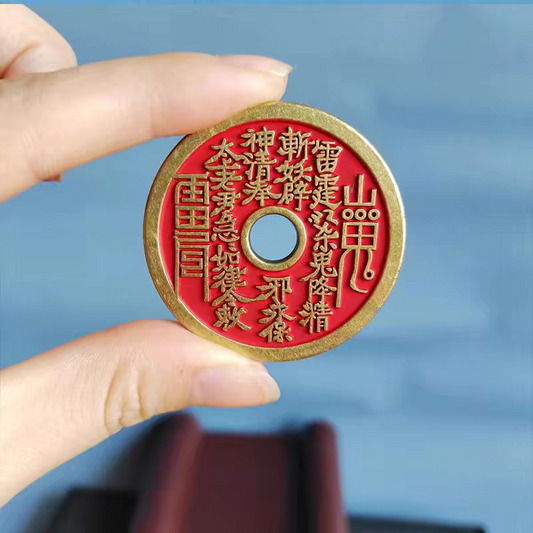
Consecrated Thunder-Jujube Amulet Pendant Mountain Ghost Coin Bagua Energy Field Peace Amulet
Regular price $39.00 USDRegular priceUnit price / perSale price $39.00 USD -
Consecrated Exorcism and Safety Protection Pendant with Mountain Ghost Coin Golden Light Mantra
Regular price $88.00 USDRegular priceUnit price / perSale price $88.00 USD -
Consecrated Taoist Healing Talisman 治病符
Regular price $107.00 USDRegular priceUnit price / perSale price $107.00 USD -
Taoist Purple-Gold Gourd Black Myth: Wukong
Regular price $36.00 USDRegular priceUnit price / perSale price $36.00 USD -
Consecrated Taoist Talisman for Cursing Evil Opponents 已开光道教打小人符
Regular price $107.00 USDRegular priceUnit price / perSale price $107.00 USD -
Consecrated Taoist House Protection Talisman 已开光道教镇宅符
Regular price $107.00 USDRegular priceUnit price / perSale price $107.00 USD -
Taoist Luck-Transfer Talisman Fortune-Transfer Symbols 转运符
Regular price $107.00 USDRegular priceUnit price / perSale price $107.00 USD -
Taoist Thunder struck Jujube Wood Five Wealth Gods Blessing Amulet Pendant
Regular price $27.00 USDRegular priceUnit price / perSale price $27.00 USD
Introduction to Taoism Q&A
View all-
The Grand Penitential Liturgy of the Jade Repos...
The Grand Penitential Liturgy of the Jade Repository: Late Tang master Du Guangting's expanded rite for directional confessions to Heavenly Worthies, repenting endless errors, erasing sins, and praying for imperial...
The Grand Penitential Liturgy of the Jade Repos...
The Grand Penitential Liturgy of the Jade Repository: Late Tang master Du Guangting's expanded rite for directional confessions to Heavenly Worthies, repenting endless errors, erasing sins, and praying for imperial...
-
What is "fuqi" in Taoism?
Fuqi: Ancient Taoist art of “wearing qi” — breathe with cosmos, transform energy, heal body, calm mind, awaken spirit through rhythmic, mindful respiration.
What is "fuqi" in Taoism?
Fuqi: Ancient Taoist art of “wearing qi” — breathe with cosmos, transform energy, heal body, calm mind, awaken spirit through rhythmic, mindful respiration.
-
What Talismans Are Used in Taoist Rituals and C...
Daoist Ritual Symbols: key talismans like banners, door, lamp, and ceremonial charms used in rites to command spirits, heal, and guide souls.
What Talismans Are Used in Taoist Rituals and C...
Daoist Ritual Symbols: key talismans like banners, door, lamp, and ceremonial charms used in rites to command spirits, heal, and guide souls.
-
What is the Dao?
Yin-Yang (陰陽) The complementary forces that create harmony in the universe. Light and dark, active and passive, masculine and feminine - all interconnected.
What is the Dao?
Yin-Yang (陰陽) The complementary forces that create harmony in the universe. Light and dark, active and passive, masculine and feminine - all interconnected.