
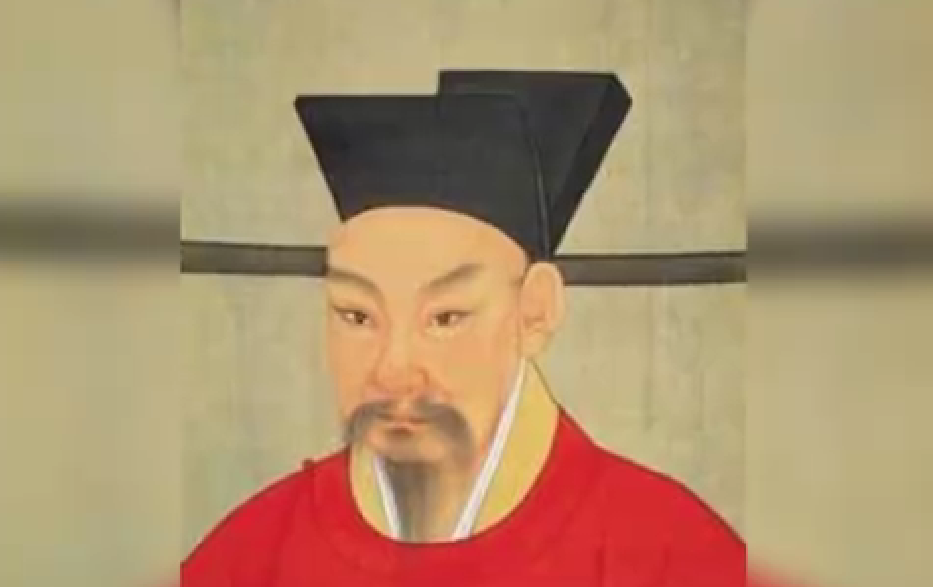
Xia Yuanding (夏元鼎) - The Taoist Master: A Journey Through Ancient Wisdom
Paul PengShare

What Does It Mean to Be a Daoshi?
In our tradition, a daoshi is far more than what Westerners might call a "priest" or "monk." We are:
| Role | Description | Purpose |
|---|---|---|
| Cultivator | One who refines the Three Treasures (jing, qi, shen) | Personal transformation and enlightenment |
| Healer | Practitioner of traditional Chinese medicine | Restoring harmony between body and nature |
| Ritual Master | Conductor of ceremonies and rites | Maintaining cosmic balance |
| Scholar | Student of classical texts and philosophy | Preserving ancient wisdom |
| Alchemist | Practitioner of internal and external alchemy | Achieving immortality through transformation |
The Foundations of Taoist Practice
Master Xia Yuanding's teachings were rooted in these fundamental principles:
The Three Treasures (San Bao 三宝)
- Jing (精) - Essence, the refined physical energy
- Qi (气) - Vital energy that flows through all living beings
- Shen (神) - Spirit, the divine consciousness within
The Five Elements (Wu Xing 五行)
Our understanding of existence flows through the eternal dance of five elemental forces:
| Element | Season | Organ | Emotion | Direction |
|---|---|---|---|---|
| Wood (木) | Spring | Liver | Anger | East |
| Fire (火) | Summer | Heart | Joy | South |
| Earth (土) | Late Summer | Spleen | Pensiveness | Center |
| Metal (金) | Autumn | Lungs | Grief | West |
| Water (水) | Winter | Kidneys | Fear | North |
The Alchemical Arts
Internal Alchemy (Nei Dan 内丹)
This is the crown jewel of our practices—the transformation of the self through meditation, breath work, and spiritual cultivation. Master Xia Yuanding was renowned for his mastery of these techniques:
The Three Passes (San Guan 三关):
- Tailbone Gate (Wei Lü Guan 尾闾关) - Opening the base energy center
- Spinal Gate (Jia Ji Guan 夹脊关) - Activating the middle pathway
- Jade Pillow Gate (Yu Zhen Guan 玉枕关) - Awakening crown consciousness
External Alchemy (Wai Dan 外丹)
The laboratory arts, where we work with minerals and herbs to create elixirs of longevity. Though often misunderstood in the West, this practice combines:
- Deep knowledge of natural substances
- Precise timing based on celestial movements
- Sacred geometry and numerical correspondences
- Meditative focus during preparation
Daily Life of a Taoist Master
The Rhythm of Cultivation
Our days flow like water, following natural patterns rather than rigid schedules:
Dawn Practice - As the sun rises, we gather the pure yang energy through:
- Standing meditation (Zhan Zhuang 站桩)
- Breathing exercises (Qi Gong 气功)
- Recitation of sacred texts
Midday Activities - The height of yang energy calls for:
- Scholarly study and writing
- Preparing herbal medicines
- Receiving visitors seeking guidance
Evening Reflection - As yin energy emerges:
- Internal alchemy practices
- Contemplation of the day's lessons
- Preparation for restorative sleep
Sacred Texts and Wisdom Literature
Master Xia Yuanding was deeply versed in our classical literature:
| Text | Focus | Key Teaching |
|---|---|---|
| Tao Te Jing (道德经) | Fundamental philosophy | Wu wei - effortless action |
| I Ching (易经) | Divination and change | Understanding life's patterns |
| Zhuangzi (庄子) | Mystical philosophy | Embracing spontaneity |
| Secret of the Golden Flower | Internal alchemy | Circulating the light |
The Hermit's Wisdom
Unlike the bustling temples you might visit today, true masters like Xia Yuanding often chose solitude—not from misanthropy, but from understanding. In the silence of mountain caves or simple hermitages, we discover truths that the noise of civilization obscures.
Why Solitude?
- Nature teaches without words
- Silence reveals the subtle voice of the Tao
- Simplicity clarifies what truly matters
- Distance from worldly concerns allows deeper cultivation
Modern Relevance of Ancient Wisdom
Though Master Xia Yuanding lived centuries ago, his teachings remain vibrantly alive. In your fast-paced Western world, these principles offer:
- Stress Relief through breathing practices and meditation
- Health Improvement via Traditional Chinese Medicine principles
- Mental Clarity through philosophical contemplation
- Spiritual Growth beyond material concerns
- Ecological Awareness through understanding natural harmony
A Final Reflection
As I conclude this sharing about Master Xia Yuanding, remember this: the Tao that can be spoken is not the eternal Tao. Words are merely fingers pointing at the moon—useful for direction, but never mistake them for the destination itself.
The path of the daoshi is not about accumulating knowledge, but about returning to simplicity. Not about gaining power, but about harmonizing with the natural flow. Not about escaping the world, but about seeing it with clear eyes.
Master Xia Yuanding's greatest teaching was his life itself—a demonstration that true wisdom lies not in complex theories, but in embodying the profound simplicity of the Tao.
May your journey along the Way be filled with wonder and wisdom.
Part of the Series
This article is part of our comprehensive guide covering all core Taoist philosophies, concepts, and practices — curated from the classic Encyclopedia of Taoism.
View Full Guide → ✦ Explore All TopicsMore in This Series

About the Author
Paul Peng
Paul Peng is a Zhengyi Taoist priest from Longhu Mountain, Jiangxi — the ancestral home of the Celestial Masters' tradition. Ordained at 25 after a dream from the Celestial Master, he has practiced for 25 years under Master Zeng Guangliang. He is one of the curators of this store, which is officially authorized by Tianshi Fu. All items are consecrated at the temple by the resident priest team.
Read his full story →


