
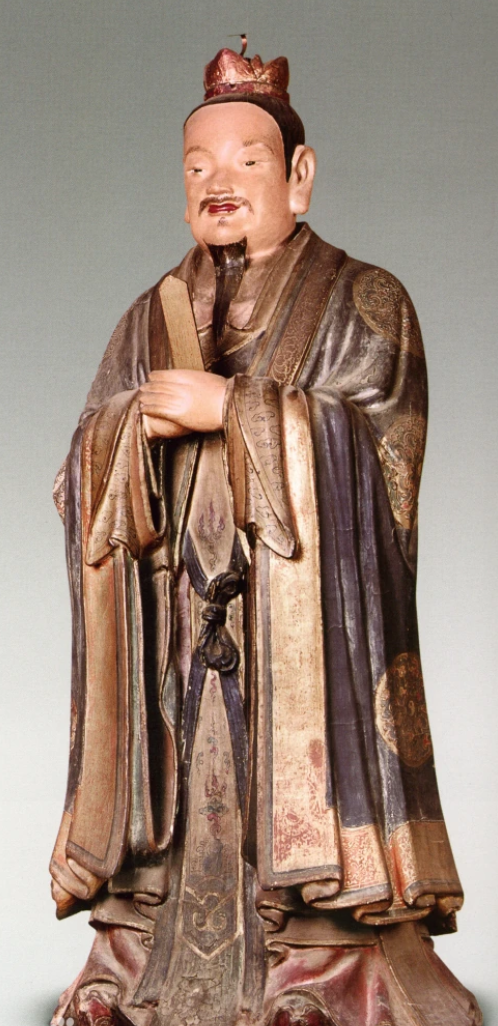
Li Zhichang (李志常) : Un éminent taoïste de la dynastie Yuan
Paul PengLi Zhichang (1193-1256), de son prénom social Haoran, également connu sous le nom de Zhenchangzi, était originaire de Guancheng (aujourd'hui comté de Fan, Henan), et un célèbre taoïste de la dynastie Yuan. Li Zhichang aspira à la recherche du Tao dans sa jeunesse et devint plus tard un disciple de Qiu Chuji. En 1220, Li Zhichang accompagna Qiu Chuji lors d'un voyage vers l'ouest jusqu'à la Grande Montagne de Neige pour rencontrer Gengis Khan. En 1227, Li Zhichang prit ses fonctions en tant que scribe taoïste de la capitale et géra simultanément les affaires du Palais Changchun.
En 1238, Li Zhichang succéda à la direction des affaires taoïstes. La cour lui conféra le titre de "Successeur orthodoxe du Dharma de Xuanmen, Personne parfaite accomplissant et enseignant Zhenchang". En 1261, il fut honoré à titre posthume du titre de "Personne parfaite Zhenchang Shangde Xuanjiao". Li Zhichang est l'auteur de "Le voyage vers l'ouest de la Personne parfaite de Changchun" en deux volumes, qui est un compte rendu détaillé du voyage vers l'ouest de la Personne parfaite Qiu Chuji.

Le Grand Voyage vers l'Ouest (1220)
La quinzième année du règne de l'empereur Taizu (1220), Li Zhichang participa à ce qui deviendrait l'une des expéditions religieuses les mieux documentées de l'histoire chinoise. Aux côtés de son maître Qiu Chuji, il entreprit l'ardu voyage vers l'ouest, traversant les Grandes Montagnes de Neige pour rencontrer Gengis Khan.
Il ne s'agissait pas seulement d'une mission diplomatique – c'était une convergence de l'Orient et de l'Occident, de la sagesse ancienne et du pouvoir impérial. Le jeune empereur mongol, malgré sa réputation de conquérant, possédait une curiosité sincère pour les secrets de longévité et de cultivation spirituelle que notre tradition taoïste protège.
| Dates clés de la carrière de Li Zhichang | |
|---|---|
| 1193 | Naissance à Guancheng (aujourd'hui comté de Fan, Henan) |
| 1220 | Accompagne Qiu Chuji lors de son voyage vers l'ouest pour rencontrer Gengis Khan |
| 1227 | Nommé Directeur des Affaires Taoïstes et Administrateur du Palais Changchun |
| 1238 | Devient Chef Suprême des Affaires Taoïstes |
| 1256 | Décède |
| 1261 | Honoré à titre posthume avec un titre élevé |
Leadership Administratif
À leur retour, les capacités de Li Zhichang furent reconnues par la cour impériale. En 1227, il fut nommé Directeur des Affaires Taoïstes (都道錄) tout en gérant simultanément le Palais Changchun. Ce double rôle exigeait non seulement une sagesse spirituelle mais aussi des compétences administratives exceptionnelles – gérer les besoins complexes des communautés taoïstes à travers l'empire tout en maintenant les traditions sacrées de notre lignée.
En 1238, Li Zhichang était devenu le Chef Suprême des Affaires Taoïstes, une position qui le plaçait au sommet de l'autorité religieuse au sein de l'Empire mongol. La cour lui conféra le magnifique titre de "Véritable Homme de la Tradition Taoïste Orthodoxe, Successeur du Dharma, Enseignant de la Voie, Vrai et Constant" (玄門正派嗣法演教真常真人).
Héritage Littéraire : Le Récit du Voyage vers l'Ouest
Mais le plus grand don de Li Zhichang à la postérité fut peut-être sa documentation méticuleuse du voyage vers l'ouest. Son œuvre, "Récits du Voyage vers l'Ouest du Véritable Homme du Printemps Éternel" (《長春真人西遊記》), s'étend sur deux volumes et fournit un compte rendu inestimable de première main de cette expédition historique.
Écrivant non pas comme un savant distant mais comme un participant intime, Li Zhichang a capturé :
- Des observations géographiques de territoires auparavant inconnus
- Des rencontres culturelles avec divers peuples le long de la Route de la Soie
- Des dialogues philosophiques entre Qiu Chuji et Gengis Khan
- Des pratiques spirituelles maintenues pendant le voyage ardu
- La dynamique politique de la première cour mongole
Le Contexte Taoïste
Pour comprendre l'importance de Li Zhichang, il faut apprécier le contexte plus large du Taoïsme Quanzhen (全真道), l'école de la "Perfection Complète" fondée par Wang Chongyang au 12ème siècle. Cette tradition met l'accent sur :
- L'alchimie interne (內丹) plutôt que sur les pratiques externes
- Le célibat et la discipline monastique
- L'intégration des éléments confucéens, bouddhistes et taoïstes
- L'engagement pratique dans les affaires mondaines tout en maintenant un détachement spirituel
Qiu Chuji, en tant que l'un des Sept Maîtres du Quanzhen, représentait parfaitement cette approche équilibrée, et Li Zhichang a hérité de cette sagesse.
Reconnaissance Posthume
Même après son décès en 1256, les contributions de Li Zhichang continuèrent d'être reconnues. En 1261, sous le règne de Kubilai Khan, il fut élevé à titre posthume au rang de "Véritable Homme de Vertu Suprême, Proclamateur de l'Enseignement, Vrai et Constant" (真常上德宣教真人).
La Signification Plus Large
La vie de Li Zhichang illustre plusieurs aspects cruciaux de l'histoire religieuse et culturelle chinoise :
Construction de ponts culturels : Son voyage avec Qiu Chuji représente l'un des premiers échanges culturels systématiques entre le taoïsme chinois et les cultures nomades d'Asie centrale.
Tradition documentaire : Sa minutieuse consignation des événements a établi un modèle pour la littérature de voyage religieux qui a influencé des générations de chroniqueurs spirituels.
Innovation administrative : Son succès dans la gestion des affaires taoïstes sous la domination mongole a démontré l'adaptabilité et la résilience des institutions religieuses chinoises.
Authenticité spirituelle : Tout au long de son ascension vers la célébrité, il a maintenu l'humble sincérité d'un véritable chercheur, ne laissant jamais le succès mondain diminuer son dévouement à la Voie.
Fait partie de la série
Cet article fait partie de notre guide complet couvrant toutes les philosophies, concepts et pratiques taoïstes fondamentales — tiré de l'ouvrage classique Encyclopédie du taoïsme.
Voir le guide complet → ✦ Explorer tous les sujets


