
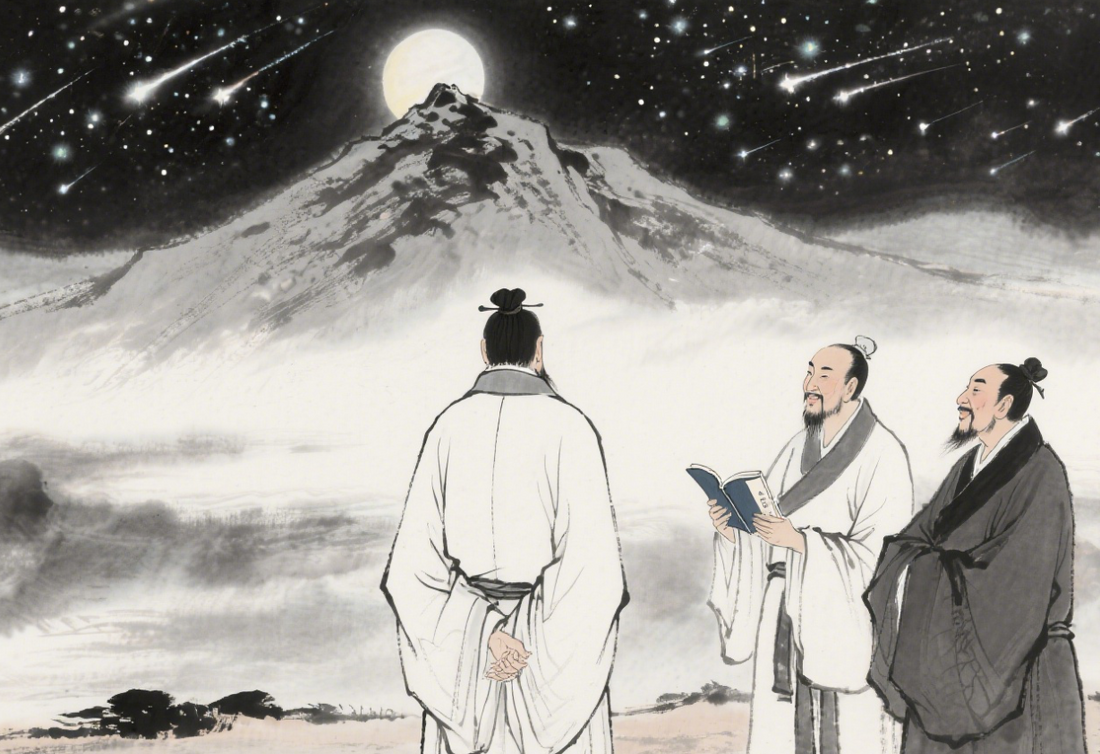
Liu Yuanran (刘渊然) : fondateur de la secte Changchun et chef taoïste de la dynastie Ming
Paul PengPartager

Le chemin taoïste : Comprendre notre tradition
Principes fondamentaux que nous vivons
Le fondement de notre pratique repose sur plusieurs piliers qui ont guidé d'innombrables générations :
Wu Wei (無為) - Souvent mal compris comme "ne rien faire", ce principe nous enseigne en fait à agir en harmonie avec le flux naturel plutôt que d'imposer notre volonté au monde. Comme l'eau qui trouve sans effort son chemin autour des obstacles, nous apprenons à répondre plutôt qu'à réagir.
Équilibre Yin-Yang (陰陽) - Tout contient son contraire, et la sagesse réside dans la reconnaissance de cette interaction dynamique. La santé, l'harmonie et le progrès spirituel émergent de l'équilibre de ces forces complémentaires en nous-mêmes et dans notre environnement.
Ziran (自然) - Naturel ou spontanéité. Nous cultivons un état où nos actions proviennent de notre nature authentique plutôt que d'un conditionnement artificiel.
Pratiques et disciplines traditionnelles
Notre culture quotidienne englobe plusieurs dimensions :
| Catégorie de pratique | Méthodes | Objectif |
|---|---|---|
| Alchimie interne (內丹) | Méditation, exercices de respiration, circulation de l'énergie | Raffinement du qi, transformation spirituelle |
| Alchimie externe (外丹) | Médecine à base de plantes, préparations minérales | Soutenir la santé physique et la longévité |
| Arts du mouvement | Taiji, Qigong, yoga taoïste | Harmonisation du corps et de l'esprit |
| Étude savante | Textes classiques, poésie, calligraphie | Cultiver la sagesse et le raffinement culturel |
| Pratique rituelle | Cérémonies, offrandes, service communautaire | Maintien du lien avec le divin et la société |
La vie monastique et l'adaptation moderne
Dans les retraites montagnardes traditionnelles, nous nous levons avant l'aube pour saluer le qi du nouveau jour. Notre emploi du temps suit les rythmes naturels – méditation au lever du soleil, étude le matin quand l'esprit est clair, pratique physique l'après-midi et contemplation à l'approche du soir.
Pourtant, la Voie s'adapte à toutes les circonstances. Les taoïstes modernes peuvent vivre en ville, avoir un emploi régulier et élever une famille tout en maintenant leur pratique spirituelle. La clé ne réside pas dans les circonstances extérieures mais dans la cultivation intérieure.
Contexte historique et lignées
Grandes écoles taoïstes
Notre tradition comprend plusieurs branches principales, chacune soulignant différents aspects du chemin :
École Quanzhen (全真派) - "Perfection Complète"
- Fondée au XIIe siècle
- Met l'accent sur l'alchimie interne et la vie monastique célibataire
- Principaux centres au mont Hua et au mont Wudang
École Zhengyi (正一派) - "Unité Orthodoxe"
- Trace sa lignée jusqu'à Zhang Daoling (IIe siècle de notre ère)
- Clergé héréditaire, le mariage est autorisé
- Fortement axée sur la pratique rituelle et le service communautaire
Traditions taoïstes populaires
- Pratiques locales intégrées aux principes taoïstes
- Accent sur la guérison, la divination et le bien-être communautaire
- Varie considérablement selon les régions
Textes classiques que nous étudions
Notre tradition de sagesse est préservée dans de nombreux textes, chacun offrant des aperçus uniques :
| Texte | Auteur/Période | Focus |
|---|---|---|
| Dao De Jing (道德經) | Laozi (VIe siècle av. J.-C.) | Principes fondamentaux du Dao |
| Zhuangzi (莊子) | Zhuangzi (IVe siècle av. J.-C.) | Philosophie à travers des histoires et des paradoxes |
| I Ching (易經) | Divers (ancien) | Divination et schémas cosmiques |
| Taiping Jing (太平經) | Dynastie Han | Harmonie sociale et gouvernance |
| Secret de la Fleur d'Or | Médiéval | Pratiques d'alchimie interne |
Sagesse pratique pour la vie quotidienne
Cultiver la santé et la longévité
Nous concevons la santé comme le flux harmonieux du qi à travers le système des méridiens du corps. La maladie résulte de blocages ou de déséquilibres, que nous traitons par :
- Thérapie diététique suivant les rythmes saisonniers et la constitution individuelle
- Phytothérapie utilisant des substances naturelles pour rétablir l'équilibre
- Acupuncture et massage pour réguler le flux de qi
- Méditation et respiration pour calmer l'esprit et renforcer l'essence vitale
Approche philosophique des défis modernes
Dans notre monde en évolution rapide, la sagesse ancienne offre des conseils pratiques :
Sur le stress et l'anxiété : Comme un arbre qui plie avec le vent plutôt que de se briser, nous apprenons la flexibilité plutôt que la rigidité. Les problèmes se résolvent souvent naturellement lorsque nous cessons de forcer les solutions.
Sur les relations : Comprendre que tous les êtres ont leur propre nature nous empêche d'essayer de changer les autres. Au lieu de cela, nous nous concentrons sur notre propre cultivation et répondons avec compassion.
Sur la réussite matérielle : La richesse et le statut ne sont ni bons ni mauvais en soi. La question est de savoir s'ils servent notre bien-être authentique ou s'ils deviennent des obstacles à la paix intérieure.
Idées fausses et clarifications
De nombreux visiteurs occidentaux arrivent avec des idées façonnées par les médias populaires ou les interprétations New Age. Permettez-moi de clarifier quelques malentendus courants :
Nous ne sommes pas retirés du monde - Les vrais taoïstes s'engagent activement dans la société tout en maintenant un équilibre intérieur. De nombreux taoïstes historiques ont servi de conseillers aux dirigeants ou ont contribué aux arts et aux sciences.
Nos pratiques ne sont pas une évasion de la réalité - La méditation et la cultivation améliorent notre capacité à faire face habilement aux défis de la vie, et non à les éviter.
Le taoïsme n'est pas passif - Le Wu wei demande une grande habileté et une grande conscience. Comme un maître des arts martiaux qui vainc ses adversaires avec un minimum d'effort, nous apprenons à agir avec une efficacité maximale et un gaspillage minimal.
Le chemin à parcourir
Le chemin de chaque personne avec le Dao est unique. Certains sont attirés par l'étude philosophique, d'autres par la méditation et la culture interne, d'autres encore par le service et la pratique rituelle. Tous les chemins peuvent mener à la compréhension s'ils sont poursuivis avec sincérité et patience.
L'essence reste constante : apprendre à vivre en harmonie avec l'ordre naturel, cultiver notre nature authentique et servir le bien commun par notre transformation individuelle.
Que votre chemin soit illuminé par la sagesse des âges, et que vous trouviez dans le Dao à la fois la paix pour vous-même et la bénédiction pour tous les êtres.
Fait partie de la série
Cet article fait partie de notre guide complet couvrant toutes les philosophies, concepts et pratiques taoïstes fondamentaux — extraits de l'œuvre classique Encyclopédie du Taoïsme.
Voir le guide complet → ✦ Explorer tous les sujets
About the Author
Paul Peng
Paul Peng is a Zhengyi Taoist priest from Longhu Mountain, Jiangxi — the ancestral home of the Celestial Masters' tradition. Ordained at 25 after a dream from the Celestial Master, he has practiced for 25 years under Master Zeng Guangliang. He is one of the curators of this store, which is officially authorized by Tianshi Fu. All items are consecrated at the temple by the resident priest team.
Read his full story →


