
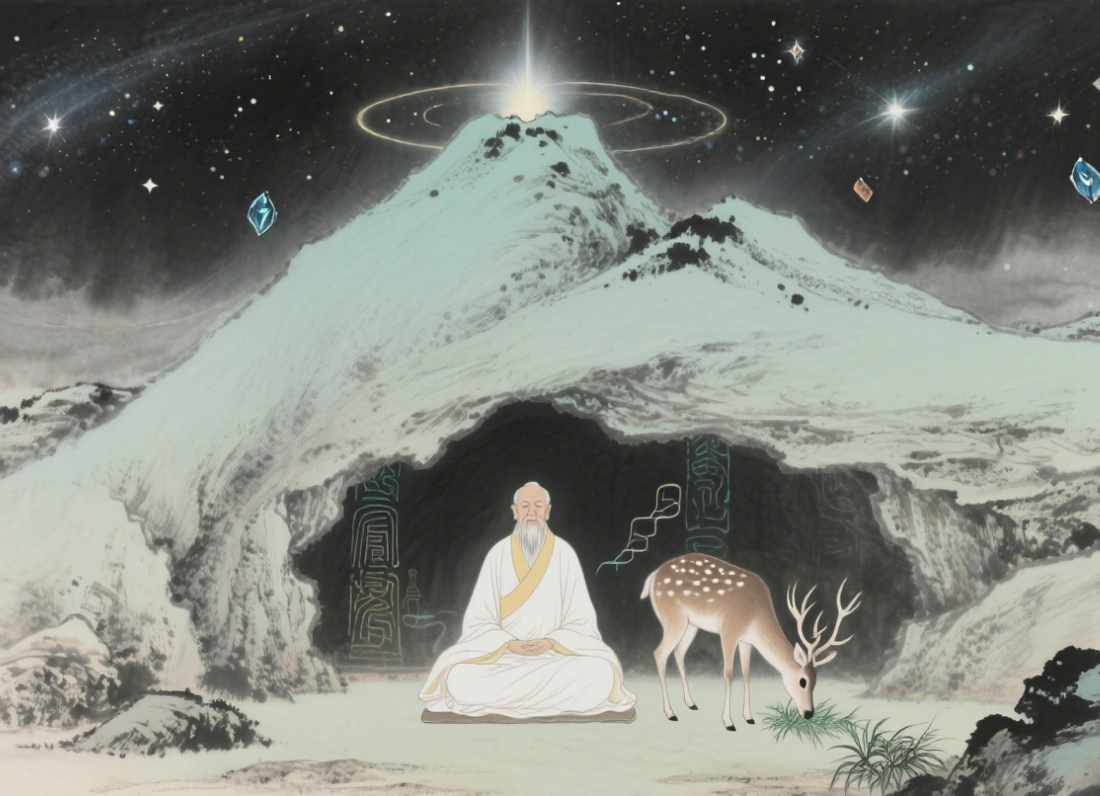
Shao Yuanjie (邵元节) : taoïste et leader de confiance de la dynastie Ming
Paul PengPartager

Le chemin vers l'illumination
Début de vie et vocation
Le parcours du jeune Shao commença dans les montagnes du Jiangxi, où les pics enveloppés de brume sont depuis longtemps des sanctuaires pour ceux qui recherchent la cultivation spirituelle. Contrairement à beaucoup qui héritent de leurs positions religieuses, Shao a gagné la sienne par une dévotion sincère et une excellence érudite.
Ascension vers la célébrité
| Période | Réalisation | Signification |
|---|---|---|
| Années 1480 | Ordonné prêtre taoïste | Début de la formation religieuse formelle |
| Années 1490 | Études avancées des textes taoïstes | Maîtrise des écritures classiques |
| Années 1500 | Nommé à des postes de cour | Reconnaissance impériale acquise |
| Années 1520 | Devint le 43e Maître Céleste | Chef suprême de l'école Zhengyi |
Contributions à la tradition taoïste
Œuvres scripturaires et enseignements
Le plus grand don du Maître Shao à notre tradition réside dans ses œuvres savantes. Il a compilé et annoté de nombreux textes taoïstes, garantissant que les générations futures auraient accès à des enseignements authentiques. Son approche était méthodique mais inspirée – il comprenait que la préservation de la sagesse exigeait à la fois rigueur érudite et perspicacité spirituelle.
Réformes administratives
En tant que Maître Céleste, Shao a mis en œuvre des réformes cruciales au sein de l'école Zhengyi :
- Procédures d'ordination standardisées - Assurer la qualité et l'authenticité de la formation sacerdotale
- Hiérarchies claires établies - Créer de l'ordre tout en maintenant l'orientation spirituelle
- Étude savante promue - Équilibrer la méditation avec la compréhension intellectuelle
- Réseaux de temples renforcés - Établir des liens entre les communautés taoïstes de Chine
L'école Zhengyi sous sa direction
Principes fondamentaux
L'école Zhengyi (Unité Orthodoxe), que le Maître Shao a dirigée, met l'accent sur plusieurs aspects clés qui la distinguent des autres traditions taoïstes :
Maîtrise rituelle : Nous nous concentrons intensivement sur les pratiques cérémonielles, comprenant qu'un rituel approprié crée l'harmonie entre le ciel, la terre et l'humanité.
Service communautaire : Contrairement aux traditions ermites, les prêtres Zhengyi servent activement leurs communautés, effectuant des mariages, des funérailles et des cérémonies de guérison.
Autorité scripturaire : Nous adhérons strictement aux textes taoïstes classiques, les considérant non pas comme une simple philosophie mais comme des guides pratiques pour la cultivation spirituelle.
Succession héréditaire : La position de Maître Céleste est transmise par lignée familiale, assurant la continuité de la transmission authentique.
Structure organisationnelle
Maître Céleste (天师)
    ↓
Maîtres régionaux (地区法师)
    ↓
Abbés de temples (住持)
    ↓
Prêtres ordonnés (道士)
    ↓
Novices (道童)
Relations impériales et influence politique
L'ère du Maître Shao a coïncidé avec d'importants changements politiques en Chine. La dynastie Ming, bien que généralement favorable au taoïsme, exerçait une surveillance attentive des activités religieuses. Shao a navigué ces eaux avec une habileté remarquable, maintenant l'indépendance de la pratique taoïste tout en respectant l'autorité impériale.
Nominations à la cour
Sa réputation de sagesse et d'intégrité lui a valu plusieurs postes à la cour :
- Conseiller impérial pour les affaires religieuses
- Superviseur des cérémonies taoïstes
- Conseiller en matière spirituelle
Ces rôles lui ont permis de protéger les intérêts taoïstes tout en contribuant au bien-être spirituel général de l'empire.
Contributions philosophiques
La Voie de l'Équilibre
Le Maître Shao enseignait que la vraie pratique taoïste exige un équilibre entre :
| Aspect | Pratique interne | Expression externe |
|---|---|---|
| Étude | Contemplation des Écritures | Enseigner aux autres |
| Rituel | Cultivation personnelle | Cérémonies communautaires |
| Moralité | Auto-purification | Guidance éthique |
| Service | Développement spirituel | Aider ceux qui sont dans le besoin |
Intégration des traditions
L'une des plus grandes réalisations de Shao fut sa capacité à intégrer diverses branches de la pensée taoïste sans compromettre leur caractère essentiel. Il comprit que si le Dao est un, ses expressions sont multiples, et la sagesse réside dans la reconnaissance de l'unité au sein de la diversité.
Héritage et influence
Impact durable sur la pratique taoïste
L'influence du Maître Shao s'étend bien au-delà de sa vie. Ses réformes organisationnelles ont créé une base stable pour l'école Zhengyi qui perdure aujourd'hui. Le 63e et actuel Maître Céleste, Zhang Yuanxian, opère toujours depuis la montagne Longhu en utilisant les structures que Shao a contribué à établir.
Pertinence moderne
Dans notre monde contemporain, l'exemple du Maître Shao offre de précieuses leçons :
- Dévouement érudit : Son engagement à préserver les enseignements authentiques nous rappelle que la tradition exige à la fois révérence et rigueur intellectuelle.
- Sagesse pratique : Sa capacité à servir les besoins spirituels et séculiers montre comment les principes taoïstes peuvent nous guider dans tous les aspects de la vie.
- Leadership adaptatif : Sa navigation réussie des changements politiques démontre l'importance de la flexibilité sans compromettre les valeurs fondamentales.
Réflexions depuis la montagne
En écrivant ces mots depuis ma propre humble retraite montagnarde, je me souviens de la sagesse éternelle du Maître Shao. Il comprenait qu'être un prêtre taoïste signifie plus qu'une simple cultivation personnelle – cela signifie servir de pont entre le Dao éternel et les besoins immédiats des êtres humains.
Sa vie exemplifie ce que nous appelons le wu wei – une action sans effort qui découle naturellement d'une compréhension profonde. Il n'a pas forcé le changement, mais a créé les conditions pour qu'une transformation positive puisse se produire naturellement.
Conclusion : La voie continue
Le Maître Shao Yuanjie est passé dans le royaume éternel en 1539, mais son influence continue de couler comme les ruisseaux de montagne qui alimentent les vallées en contrebas. Pour ceux d'entre nous qui suivent la voie taoïste, son exemple nous rappelle que la véritable maîtrise combine une profonde compréhension spirituelle avec un service pratique aux autres.
Les montagnes où il a jadis marché résonnent encore de ses enseignements. Les textes qu'il a conservés guident toujours les chercheurs de vérité. Les structures organisationnelles qu'il a créées servent encore les communautés à travers la Chine et au-delà.
En fin de compte, c'est peut-être la plus grande leçon que le Maître Shao nous offre : que le Dao n'est pas un concept philosophique lointain, mais une réalité vivante qui s'exprime à travers des praticiens dévoués qui servent le ciel et la terre avec une égale dévotion.
Fait partie de la série
Cet article fait partie de notre guide complet couvrant toutes les philosophies, concepts et pratiques taoïstes fondamentales – tiré de la classique Encyclopédie du Taoïsme.
Voir le guide complet → ✦ Explorer tous les sujets
About the Author
Paul Peng
Paul Peng is a Zhengyi Taoist priest from Longhu Mountain, Jiangxi — the ancestral home of the Celestial Masters' tradition. Ordained at 25 after a dream from the Celestial Master, he has practiced for 25 years under Master Zeng Guangliang. He is one of the curators of this store, which is officially authorized by Tianshi Fu. All items are consecrated at the temple by the resident priest team.
Read his full story →


