
Taoism in the Northern Wei Dynasty
Paul PengTaoism during the Northern Wei Dynasty centered on two main aspects: the shaping of Taoism as a formal religion and the debates between Taoism and Buddhism.
The Shaping of Taoism: After the Jin court moved eastward, society remained turmoil and ideological unity fragmented for over a century. During this period, the continuous introduction of Buddhist culture externally changed the historical absence of a unified religious belief, while the widespread development of Taoist immortality thoughts internally promoted the re-integration of Confucian and Taoist scholarship in Chinese culture. This process gradually shaped the emerging religion—Taoism.
Main Features of Taoism in the Northern Wei Dynasty

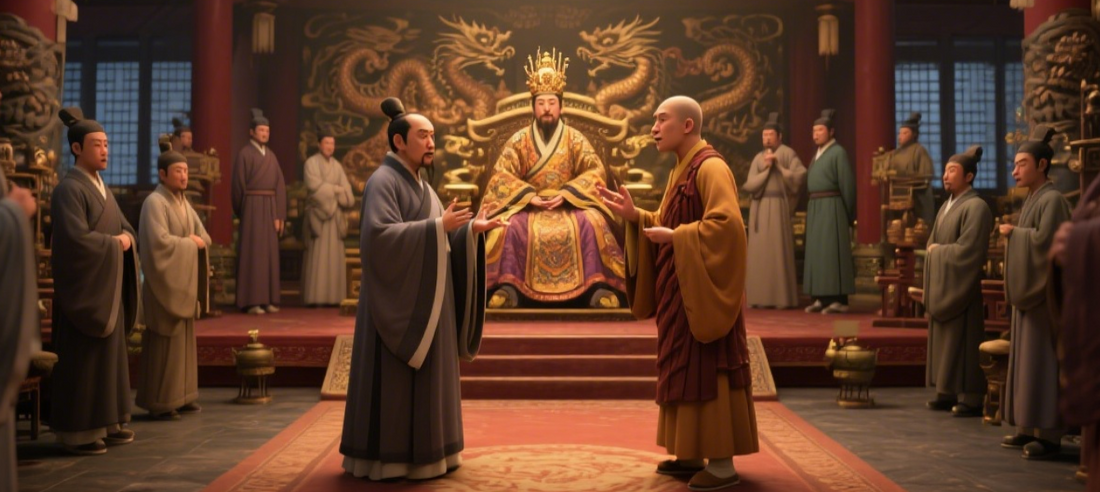
Debates between Taoism and Buddhism: After taking shape, Taoism began to compete with Buddhism politically, vying for the trust of the imperial court and scholar-officials to promote its teachings. This rivalry became increasingly explicit in the Northern Wei Dynasty, ending the scattered operations of Taoist sects since the Western and Eastern Jin dynasties and uniting Taoist forces for collective ideological struggle. The pivotal figure leading this Taoist movement was Kou Qianzhi, the Celestial Master of the Northern Wei.

It is evident that Kou Qianzhi reformed the teachings founded by Zhang Daoling from the late Han to Wei and Jin dynasties, along with the alchemical techniques of immortal Taoists. His reforms formalized Taoism, establishing "Tai Shang Lao Jun" (the Supreme Old Lord) as the religion’s patriarch. Additionally, he altered the traditional practice of designating famous mountains and caves in China as Taoist parishes (initiated by Zhang Daoling), transforming the Taoist governance model from immortals managing earthly affairs to a system where humans, ghosts, celestial beings, and deities communicated mutually—forming the embryonic structure of a unified Taoist cosmos integrating heaven and earth.
| Aspect | Details |
|---|---|
| Key Figures | Kou Qianzhi was one of the most important Taoist figures of the Northern Wei Dynasty. He proposed the concept of the “New Celestial Masters’ Way” and systematically organized the teachings and structure of Taoism, which helped spread Taoism widely in the Northern Wei period. |
| Key Events | Kou Qianzhi received support from Emperor Taiwu of Northern Wei. He established the Haotian Temple in Pingcheng and conducted several important Taoist rituals. These activities not only enhanced the status of Taoism but also promoted its spread in the north. |
Part of the Series
This article is part of our comprehensive guide covering all core Taoist philosophies, concepts, and practices — curated from the classic Encyclopedia of Taoism.
View Full Guide → ✦ Explore All Topics


