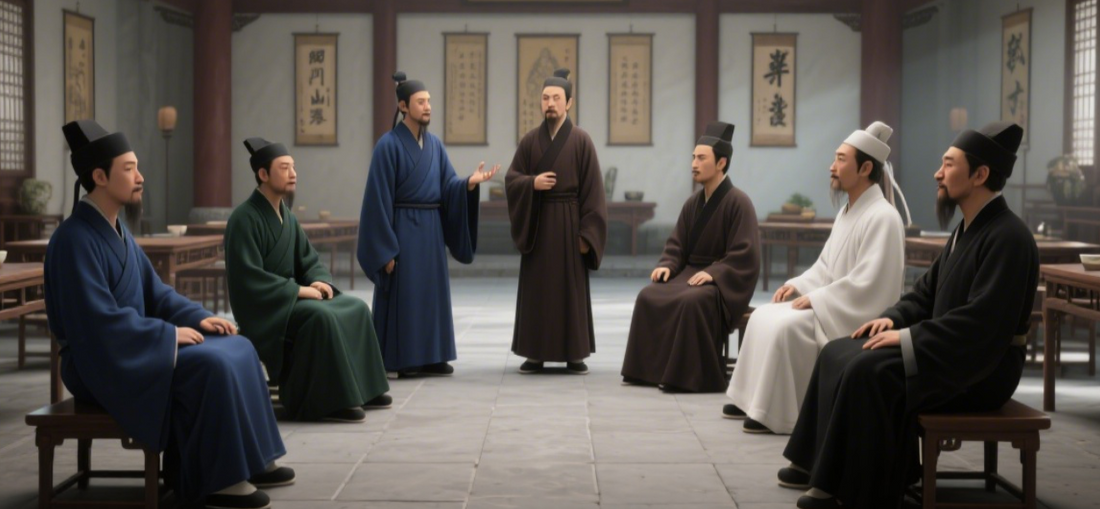
What are the Taoist sects?
Paul PengShare
Since its emergence, Taoism has continuously developed, derived, and divided into numerous sects, with a particularly large number of derivative sects appearing during the Wei, Jin, Sui, Tang, Song, and Yuan dynasties.
These sects can be classified in the following ways:
- By doctrinal principles, they are divided into five categories: the Good - doing Sect, the Scripture - focused Sect, the Talisman - magic Sect, the Alchemy Sect, and the Divination - and - Prediction Sect.
- By region, they include the Longmen Sect, the Laoshan Sect, the Suishan Sect, the Huashan Sect, the Wudang Sect, etc.
- By representative figures, they consist of the Shaoyang Sect (represented by Wang Xuanfu), the Zhengyang Sect (represented by Han Zhongli), the Chunyang Sect (represented by Lü Dongbin), the Ziyang Sect (represented by Zhang Boduan), etc.
- By Taoist lineages, they cover the Nanwu Sect (founded by Tan Churui), the Qingjing (Quiet and Pure) Sect (founded by Sun Buer), the Zhengyi Sect (founded by Zhang Xujing), the Qingwei Sect (founded by Ma Danyang), etc.
94 Articles
Part of the Series
This article is part of our comprehensive guide covering all core Taoist philosophies, concepts, and practices — curated from the classic Encyclopedia of Taoism.
View Full Guide → ✦ Explore All Topics
About the Author
Paul Peng
Paul Peng is a Zhengyi Taoist priest from Longhu Mountain, Jiangxi — the ancestral home of the Celestial Masters' tradition. Ordained at 25 after a dream from the Celestial Master, he has practiced for 25 years under Master Zeng Guangliang. He is the curator of this store, which is officially authorized by Tianshi Fu. All items are consecrated at the temple by the resident priest team.
Read his full story →