
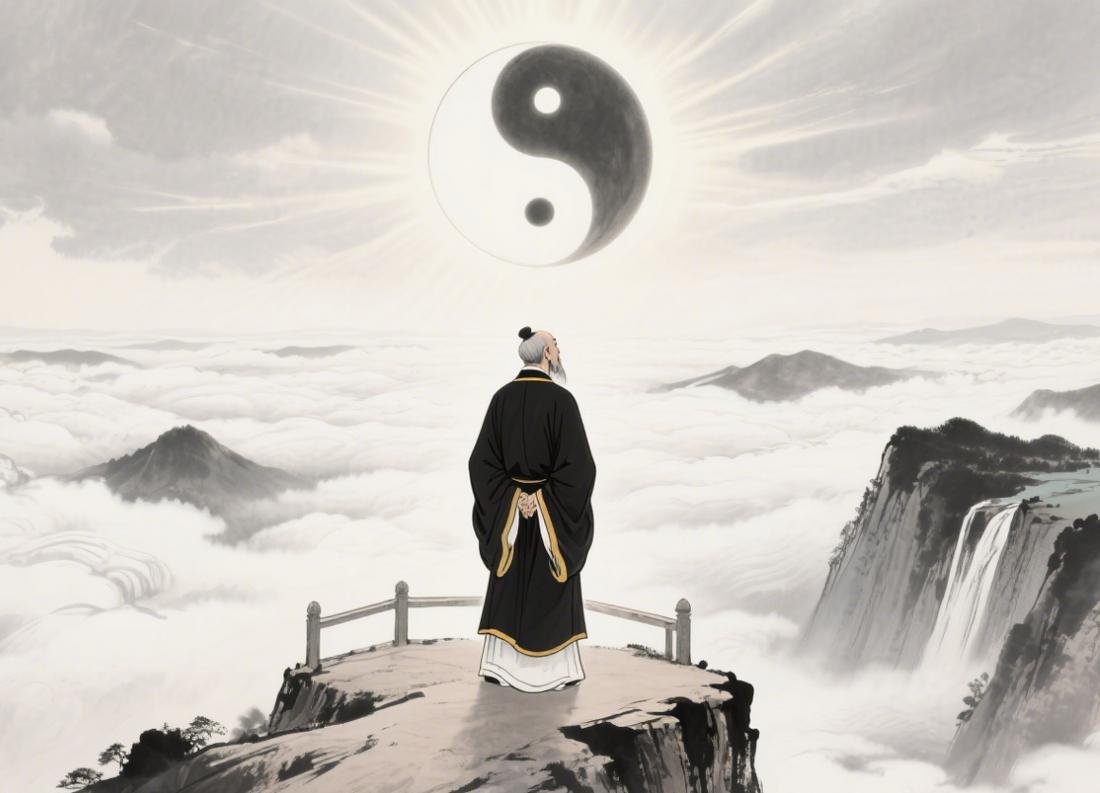
Huangfu Tan (皇甫坦) – Der taoistische Meister
Paul PengAktie

Verständnis des taoistischen Priesters (道士)
Als jemand, der jahrzehntelang die Bergpfade gegangen und in Tempelhallen meditiert hat, möchte ich Ihnen mitteilen, was es wirklich bedeutet, ein Daoshi zu sein – ein Diener des Tao.
Der Begriff 道士 bedeutet wörtlich „Gelehrter des Weges“ oder „Gentleman des Tao“. Wir sind nicht nur Priester im westlichen Sinne, sondern Hüter einer alten Weisheit, die wie Wasser durch die Täler der chinesischen Kultur fließt.
Die Drei Schätze eines Daoisten
| Schatz | Chinesisch | Bedeutung | Praxis |
|---|---|---|---|
| Mitgefühl | 慈 (Cí) | Liebende Güte gegenüber allen Wesen | Heilkünste, Hilfe für Gemeinschaften |
| Genügsamkeit | 俭 (Jiǎn) | Einfachheit und Mäßigung | Leben mit minimalem Besitz |
| Bescheidenheit | 不敢为天下先 | Es nicht wagen, der Erste in der Welt zu sein | Führen durch Beispiel, nicht durch Zwang |
Der Pfad der Kultivierung
Wenn der Morgennebel von den heiligen Gipfeln aufsteigt, beginnen wir unsere täglichen Praktiken. Das Leben eines taoistischen Priesters dreht sich um diese wesentlichen Elemente:
Innere Alchemie (内丹 - Nèi Dān)
Dies ist das Herz unserer Praxis – die Transformation von Körper, Geist und Seele durch Meditation, Atemtechniken und Energie-Kultivierung. Anders als die äußere Alchemie, die das Elixier der Unsterblichkeit durch Kräuter und Mineralien sucht, erschaffen wir das goldene Elixier in uns selbst.
Äußere Praktiken (外功 - Wài Gōng)
- Rituelle Zeremonien für die Gemeinschaft
- Feng Shui-Beratungen
- Traditionelle chinesische Medizin
- Kalligraphie und Poesie
- Kampfkünste (insbesondere Tai Chi)
Historischer Kontext: Die Huangfu-Linie
Der Familienname Huangfu (皇甫) hat eine große Bedeutung in der chinesischen Geschichte. Es ist ein zusammengesetzter Familienname, der während der Frühlings- und Herbstperiode entstand und Elemente kombiniert, die kaiserliche Gunst und gelehrte Errungenschaften andeuten.
Bemerkenswerte historische Persönlichkeiten mit dem Namen Huangfu
| Name | Periode | Beitrag |
|---|---|---|
| Huangfu Mi (皇甫謐) | 215-282 n. Chr. | Medizingelehrter, Autor des Zhenjiu Jiayijing |
| Huangfu Shi (皇甫湜) | Tang-Dynastie | Literarische Figur und Regierungsbeamter |
| Huangfu Song (皇甫嵩) | Han-Dynastie | General, der den Gelben-Turban-Aufstand unterdrückte |
Die drei Schulen des Taoismus
Im Laufe unserer langen Geschichte hat sich der Taoismus in verschiedene Schulen entwickelt, die jeweils unterschiedliche Aspekte des Weges betonen:
Zhengyi (正一) – Schule der Orthodoxen Einheit
- Gegründet: Östliche Han-Dynastie
- Fokus: Rituale, Exorzismus, Heilung
- Priester: Können heiraten und Familien haben
- Zentren: Hauptsächlich in Südchina
Quanzhen (全真) – Schule der Vollständigen Reinheit
- Gegründet: Jin-Dynastie (12. Jahrhundert)
- Fokus: Innere Alchemie, Zölibat, Meditation
- Priester: Mönchsleben in Tempeln
- Zentren: Nordchina, Weißwolken-Tempel in Peking
Shangqing (上清) – Schule der Höchsten Klarheit
- Gegründet: 4. Jahrhundert n. Chr.
- Fokus: Meditation, Visualisierung, Schriftstudium
- Vermächtnis: Beeinflusste spätere taoistische Praktiken erheblich
Alltag im Tempel
Der Hahn kräht vor Tagesanbruch, und wir erheben uns mit dem natürlichen Rhythmus des Kosmos. Unser Tag entfaltet sich wie die Blütenblätter eines Lotus:
Vor Sonnenaufgang (寅时 - Yín Shí, 3-5 Uhr morgens)
- Morgentoilette und Vorbereitung
- Stille Meditation nach Osten ausgerichtet
Dämmerung (卯时 - Mǎo Shí, 5-7 Uhr morgens)
- Morgengebete und Räucheropfer
- Rezitation des Tao Te Ching
Morgen (辰时 - Chén Shí, 7-9 Uhr morgens)
- Gemeinsames Frühstück (einfache vegetarische Kost)
- Tempelpflege und Gartenarbeit
Mittag (午时 - Wǔ Shí, 11-13 Uhr)
- Studium klassischer Texte
- Kalligraphie-Übungen
Nachmittag (未时 - Wèi Shí, 13-15 Uhr)
- Empfang von Besuchern und Konsultationen
- Zubereitung von Kräutermedizin
Abend (酉时 - Yǒu Shí, 17-19 Uhr)
- Abendgebete und Reflexion
- Gruppendiskussion des Weges
Heilige Texte und Weisheit
Das Fundament unseres Verständnisses ruht auf diesen Säulen der Weisheit:
Primäre Texte
- 道德经 (Tao Te Ching) – Der grundlegende Text, der Laozi zugeschrieben wird
- 庄子 (Zhuangzi) – Philosophische Schriften über Natürlichkeit und Spontaneität
- 太平经 (Taiping Jing) – Klassiker des Großen Friedens
Tägliche Rezitationen
Wir betrachten oft Passagen wie diese aus dem Tao Te Ching:
„Der Weise versucht nichts sehr Großes,
und erreicht so Größe.“
„Wasser ist fließend, weich und nachgiebig.
Aber Wasser wird Felsen abtragen,
der nicht nachgeben kann und starr ist.“
Die Kunst des Wu Wei (无为)
Vielleicht wird kein Konzept von westlichen Besuchern so missverstanden wie Wu Wei – oft als „Nicht-Handeln“ übersetzt. Dies ist keine Faulheit oder Passivität, sondern vielmehr das Handeln im Einklang mit dem natürlichen Fluss der Ereignisse.
Denken Sie an einen geschickten Bootskapitän, der Stromschnellen navigiert. Er kämpft nicht gegen die Strömung, sondern nutzt ihre Kraft und nimmt feine Anpassungen mit seinem Ruder vor. Dies ist Wu Wei – müheloses Handeln, das maximale Wirkung mit minimalem Aufwand erzielt.
Praktische Anwendungen
- In der Regierungsführung: Führen durch moralisches Beispiel statt durch Zwang
- In der Medizin: Unterstützung der natürlichen Heilungsprozesse des Körpers
- In Beziehungen: Angemessen statt reaktiv reagieren
- In der Kultivierung: Spirituelle Entwicklung sich natürlich entfalten lassen
Moderne Relevanz
In diesen Zeiten des raschen Wandels und der technologischen Fortschritte bietet die alte Weisheit des Tao eine Zuflucht für die müde Seele. Viele westliche Suchende kommen in unsere Bergretreats, um das zu finden, was ihr geschäftiges Leben nicht bieten kann: inneren Frieden, Verbindung zur Natur und Verständnis ihres Platzes in der kosmischen Ordnung.
Die Prinzipien, die wir über zwei Jahrtausende bewahrt haben – Einfachheit, Harmonie mit der Natur, innere Kultivierung und mitfühlender Dienst – sprechen universelle menschliche Bedürfnisse an, die kulturelle Grenzen überschreiten.
Zeitgenössische Anwendungen
- Stressmanagement durch Meditation und Atemübungen
- Umweltbewusstsein, verwurzelt in der taoistischen Harmonie mit der Natur
- Führungsphilosophie, basierend auf Bescheidenheit und Dienst
- Gesundheitsansätze, die Prävention und Gleichgewicht betonen
Fazit: Der endlose Weg
Wie Meister Laozi uns lehrte: „Eine Reise von tausend Meilen beginnt mit einem einzigen Schritt.“ Ob Sie ein Gelehrter sind, der die chinesische Kultur studiert, ein spiritueller Sucher, der alternative Wege erkundet, oder einfach jemand, der neugierig auf unsere Traditionen ist, denken Sie daran, dass das Tao, das gesprochen werden kann, nicht das ewige Tao ist.
Der Name Huangfu Tan repräsentiert nicht nur ein Individuum, sondern eine Linie von Suchenden, die ihr Leben dem Verständnis der mysteriösen Funktionsweise des Universums gewidmet haben. In unseren einfachen Gewändern und stiller Kontemplation tragen wir eine Weisheit weiter, die den menschlichen Geist über unzählige Generationen hinweg genährt hat.
Möge Ihr Weg klar sein, und mögen Sie die Stille finden, die die Bewegung aller Dinge offenbart.
Teil der Serie
Dieser Artikel ist Teil unseres umfassenden Leitfadens, der alle Kernphilosophien, Konzepte und Praktiken des Taoismus abdeckt – kuratiert aus der klassischen Enzyklopädie des Taoismus.
Vollständigen Leitfaden ansehen → ✦ Alle Themen erkunden
About the Author
Paul Peng
Paul Peng is a Zhengyi Taoist priest from Longhu Mountain, Jiangxi — the ancestral home of the Celestial Masters' tradition. Ordained at 25 after a dream from the Celestial Master, he has practiced for 25 years under Master Zeng Guangliang. He is one of the curators of this store, which is officially authorized by Tianshi Fu. All items are consecrated at the temple by the resident priest team.
Read his full story →


